Run
The run is the main continuous passage through the tee. It connects the two ends of the primary piping line and is normally specified by the larger nominal pipe size in a reducing tee.
Butt-weld reducing tees designed to create a 90-degree branch connection where the branch outlet is smaller than the main run. Available in carbon steel, low-temperature carbon steel, alloy steel and stainless steel according to project requirements.
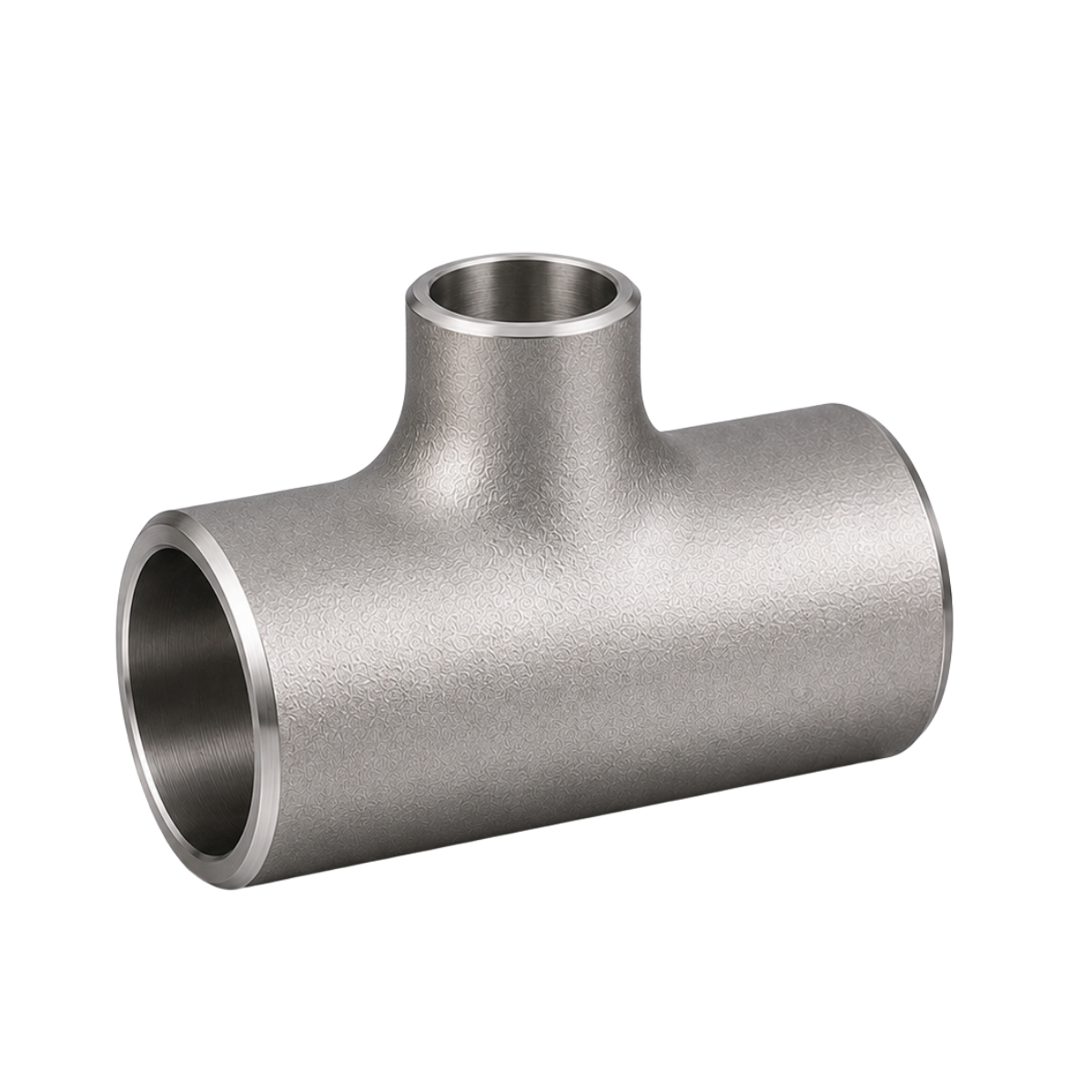
A reducing tee is a three-way pipe fitting used to create a branch connection from a main piping run where the branch outlet is smaller than the run.
The fitting provides a 90-degree branch while allowing the main run and branch to have different nominal pipe sizes. Reducing tees are commonly used where a smaller branch line is required from a larger process or utility line.
Rhevon can source reducing tees for process piping, oil & gas, petrochemical, chemical, power, utility and general industrial applications.
Supplied according to required run size, outlet size, schedule, material and applicable specification.
A reducing tee is specified primarily by the nominal sizes of its run and outlet. The outlet is smaller than the run in a reducing tee configuration.
The run is the main continuous passage through the tee. It connects the two ends of the primary piping line and is normally specified by the larger nominal pipe size in a reducing tee.
The outlet, also referred to as the branch, forms the 90-degree connection from the main run. In a reducing tee, the outlet has a smaller nominal size than the run.
The complete tee requirement is defined by the run size and outlet size. For example, a 6" × 6" × 4" tee has a 6" run and a 4" branch outlet.
Material selection can be matched to operating temperature, pressure, process media and applicable project specifications.
| Material | Typical Specification | Typical Application |
|---|---|---|
| Carbon Steel | ASTM A234 WPB | General Process · Oil & Gas |
| Low-Temperature Carbon Steel | ASTM A420 WPL6 | Low-Temperature Service |
| Alloy Steel | ASTM A234 WP11 / WP22 | High-Temperature Service |
| Stainless Steel | ASTM A403 WP304 / WP316 | Corrosive / Process Service |
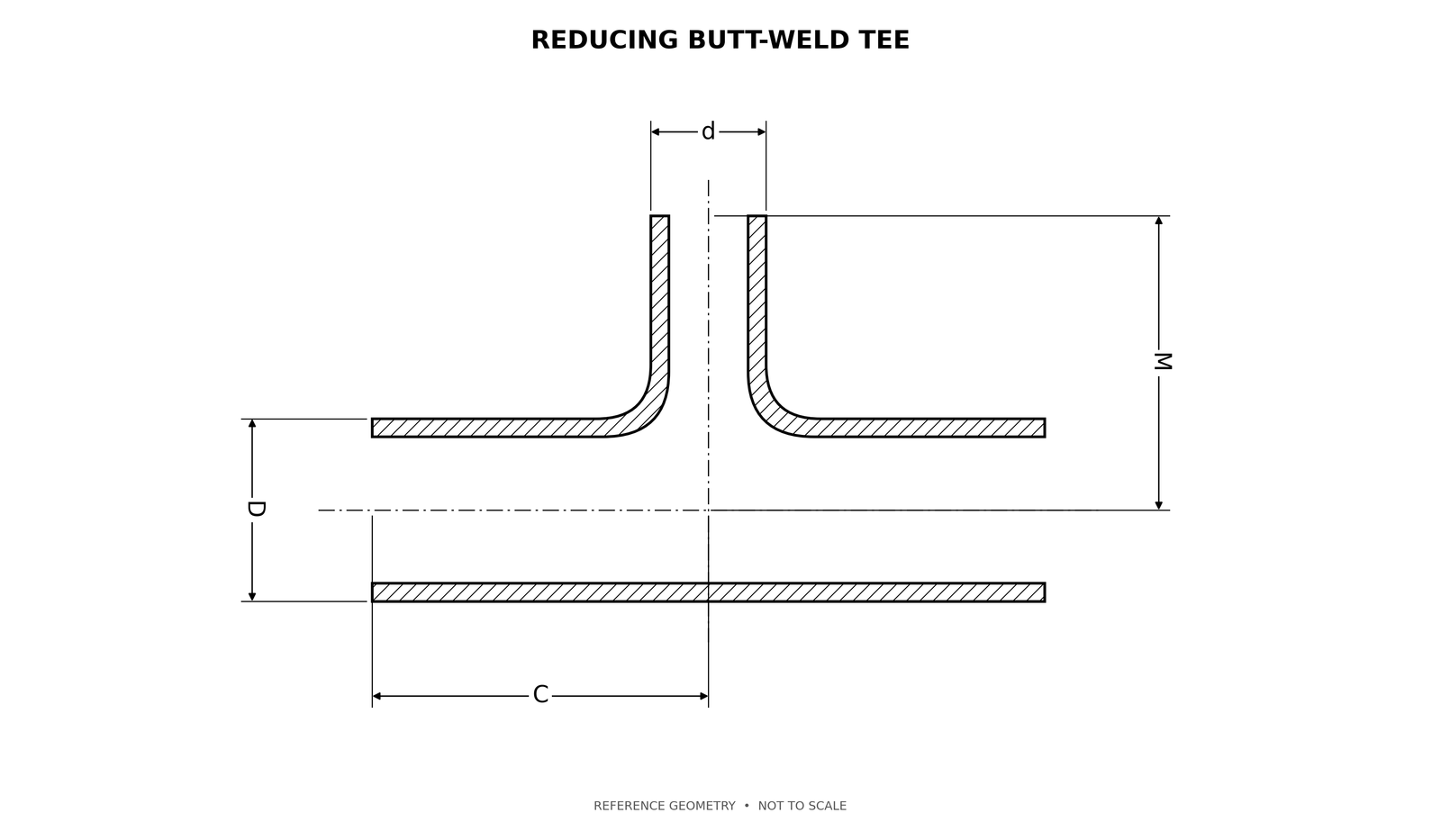
Selected reducing-tee combinations with equal run ends and a smaller branch.
| Run NPS | Branch NPS | C(mm) | M(mm) |
|---|---|---|---|
| ¾ | ½ | 28.40 | 28.40 |
| 1 | ¾ | 38.10 | 38.10 |
| 1 | ½ | 38.10 | 38.10 |
| 1 ¼ | 1 | 47.80 | 47.80 |
| 1 ¼ | ¾ | 47.80 | 47.80 |
| 1 ¼ | ½ | 47.80 | 47.80 |
| 1 ½ | 1 ¼ | 57.20 | 57.20 |
| 1 ½ | 1 | 57.20 | 57.20 |
| 1 ½ | ¾ | 57.20 | 57.20 |
| 1 ½ | ½ | 57.20 | 57.20 |
| 2 | 1 ½ | 63.50 | 60.50 |
| 2 | 1 ¼ | 63.50 | 57.20 |
| 2 | 1 | 63.50 | 50.80 |
| 2 | ¾ | 63.50 | 44.40 |
| 2 ½ | 2 | 76.20 | 69.80 |
| 2 ½ | 1 ½ | 76.20 | 66.50 |
| 2 ½ | 1 ¼ | 76.20 | 63.50 |
| 2 ½ | 1 | 76.20 | 57.20 |
| 3 | 2 ½ | 85.90 | 82.60 |
The catalog list is not exhaustive through NPS 8.
State run × run × branch sizes and wall schedule in the enquiry.
Product requirements can be reviewed against the applicable material specification, dimensional standard and purchase order requirements before supply.
Common questions about reducing tee specifications, run and outlet sizing, materials and applications.
A reducing tee is used to create a 90-degree branch connection from a larger main piping run to a smaller branch line. It allows the branch outlet to have a different, smaller nominal size than the run.
The run refers to the main passage through the tee, while the outlet or branch is the 90-degree connection from the run. In a reducing tee, the outlet is smaller than the run. For example, a 6" × 6" × 4" tee has a 6" run and a 4" outlet.
Butt-weld reducing tees are generally supplied according to applicable ASME B16.9 dimensional requirements. The material grade is specified separately according to the applicable ASTM material specification.
Provide the run size, outlet or branch size, schedule or wall thickness, material grade, quantity and applicable standard. Project drawings or additional technical requirements can also be included where applicable.
Yes. Reducing tees can be supplied along with elbows, equal tees, reducers, caps, flanges, gaskets, fasteners and other piping components as part of a mixed Bill of Materials requirement.
Share the run size, outlet size, schedule, material, quantity and applicable specification. Mixed piping component requirements are also welcome.