Flat Side Up
Installed with the flat side on the upper reference plane. This configuration may be selected where maintaining a continuous top elevation is required.
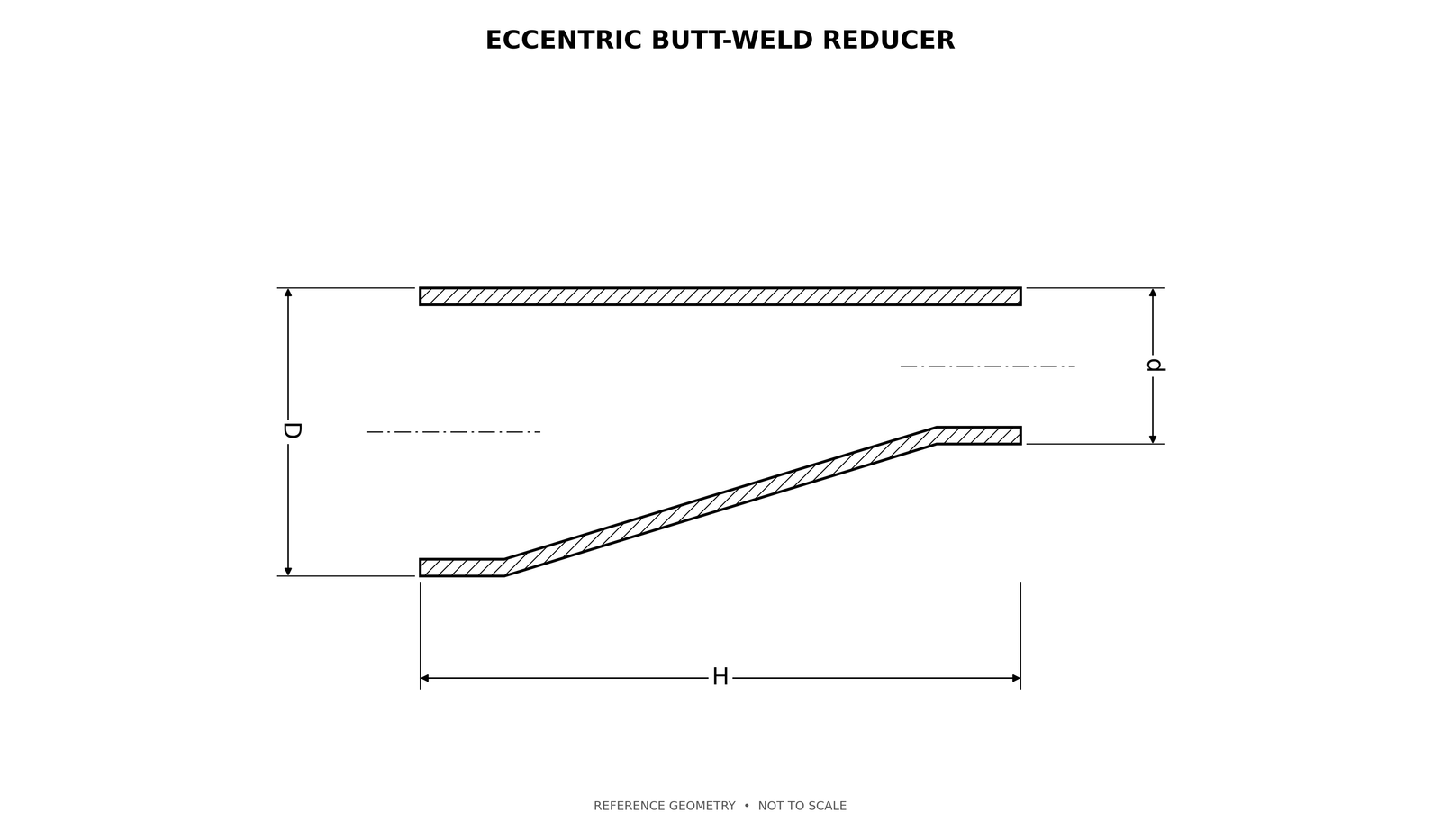
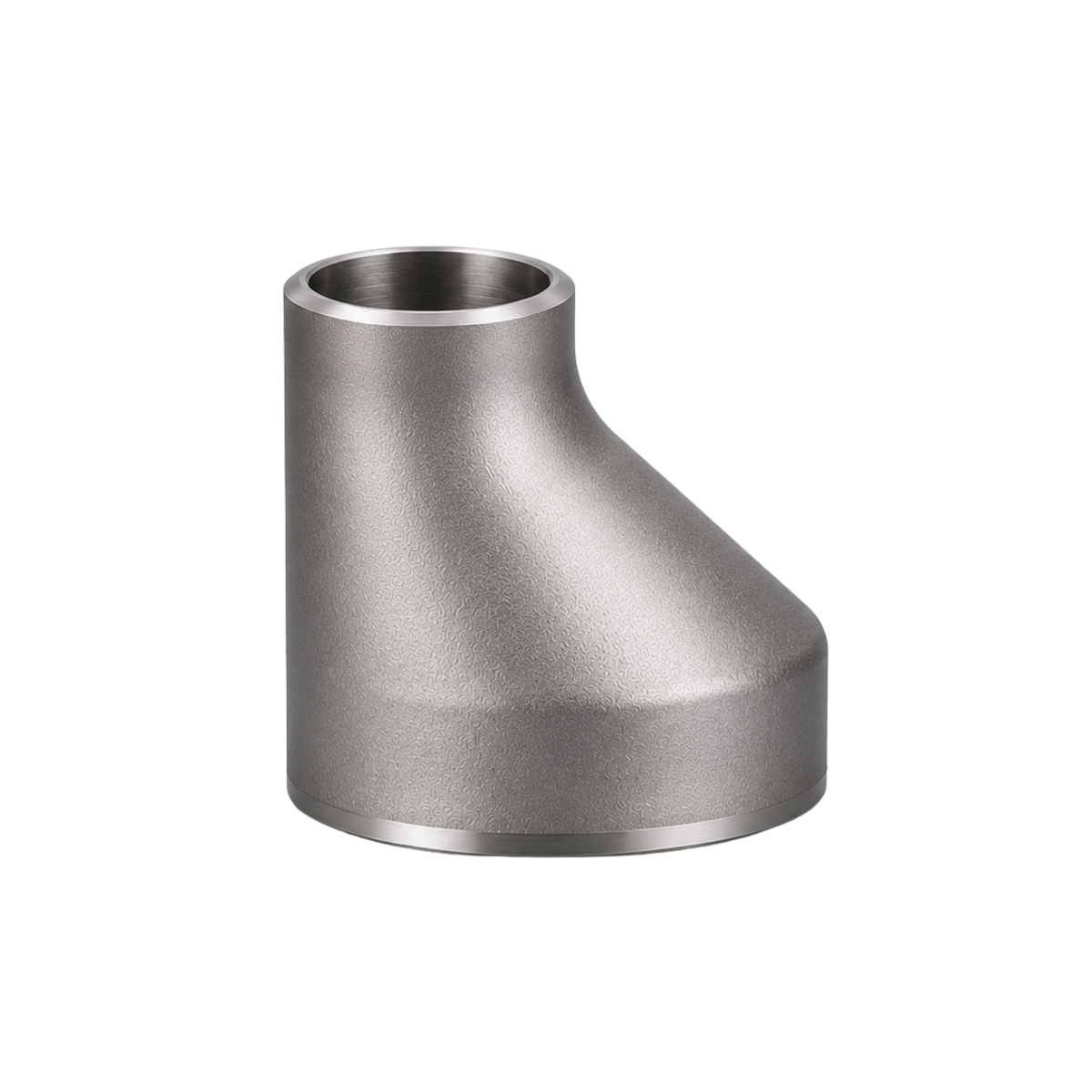
Butt-weld eccentric reducers for transitioning between different pipe sizes while maintaining an offset centerline. Available in carbon steel, low-temperature carbon steel, alloy steel and stainless steel according to project requirements.
The orientation of an eccentric reducer is selected according to the piping layout and the functional requirements of the system.
Installed with the flat side on the upper reference plane. This configuration may be selected where maintaining a continuous top elevation is required.
Installed with the flat side on the lower reference plane. This arrangement may be selected where drainage, clearance or elevation requirements dictate the orientation.
The required eccentric orientation can be specified according to the piping arrangement, drawings or project specification.
Material selection can be matched to operating temperature, pressure, process media and applicable project specifications.
| Material | Typical Specification | Typical Application |
|---|---|---|
| Carbon Steel | ASTM A234 WPB | General Process · Oil & Gas |
| Low-Temperature Carbon Steel | ASTM A420 WPL6 | Low-Temperature Service |
| Alloy Steel | ASTM A234 WP11 / WP22 | High-Temperature Service |
| Stainless Steel | ASTM A403 WP304 / WP316 | Corrosive / Process Service |
Reference overall lengths for eccentric reducers by large and small nominal pipe size.
| Large NPS | Small NPS selections | H(mm) |
|---|---|---|
| ¾ | ½ | 38.10 |
| 1 | ¾, ½ | 50.80 |
| 1 ¼ | 1, ¾, ½ | 50.80 |
| 1 ½ | 1 ¼, 1, ¾, ½ | 63.50 |
| 2 | 1 ½, 1 ¼, 1, ¾ | 76.20 |
| 2 ½ | 2, 1 ½, 1 ¼, 1 | 88.90 |
| 3 | 2 ½, 2, 1 ½, 1 ¼ | 88.90 |
| 3 ½ | 3, 2 ½, 2, 1 ½, 1 ¼ | 101.60 |
| 4 | 3 ½, 3, 2 ½, 2, 1 ½ | 101.60 |
| 5 | 4, 3 ½, 3, 2 ½, 2 | 127.00 |
| 6 | 5, 4, 3 ½, 3, 2 ½ | 139.70 |
| 8 | 6, 5, 4, 3 ½ | 152.40 |
Specify the required flat-side orientation during installation.
Obtain D, d and the wall at each end from catalog page 3; special reduction ratios require an approved supplier drawing.
Product requirements can be reviewed against the applicable material specification, dimensional standard and purchase order requirements before supply.
Common questions about eccentric reducer specifications, orientation, sizing, materials and applications.
An eccentric reducer connects pipes of different nominal sizes while maintaining an offset centerline. Its geometry provides a flat reference side and can be selected where the piping layout requires an offset transition.
A concentric reducer maintains a common centerline between the larger and smaller pipe ends. An eccentric reducer has an offset centerline, creating a flat side that can be oriented according to the piping arrangement.
The terms describe how the flat side of the eccentric reducer is oriented when installed. The required orientation should be determined from the piping layout, drawings and applicable engineering requirements.
Eccentric reducers can be sourced in carbon steel, low-temperature carbon steel, alloy steel and stainless steel. Butt-weld dimensions are generally supplied to applicable ASME B16.9 requirements, with material specifications selected according to the project requirement.
Ideally, provide the larger NPS, smaller NPS, material grade, schedule or wall thickness, required orientation, quantity and applicable standard. Project drawings or additional technical requirements can also be provided where applicable.
Share the larger and smaller pipe sizes, schedule, material, orientation, quantity and applicable specification. Mixed piping component requirements are also welcome.