Solid Closure
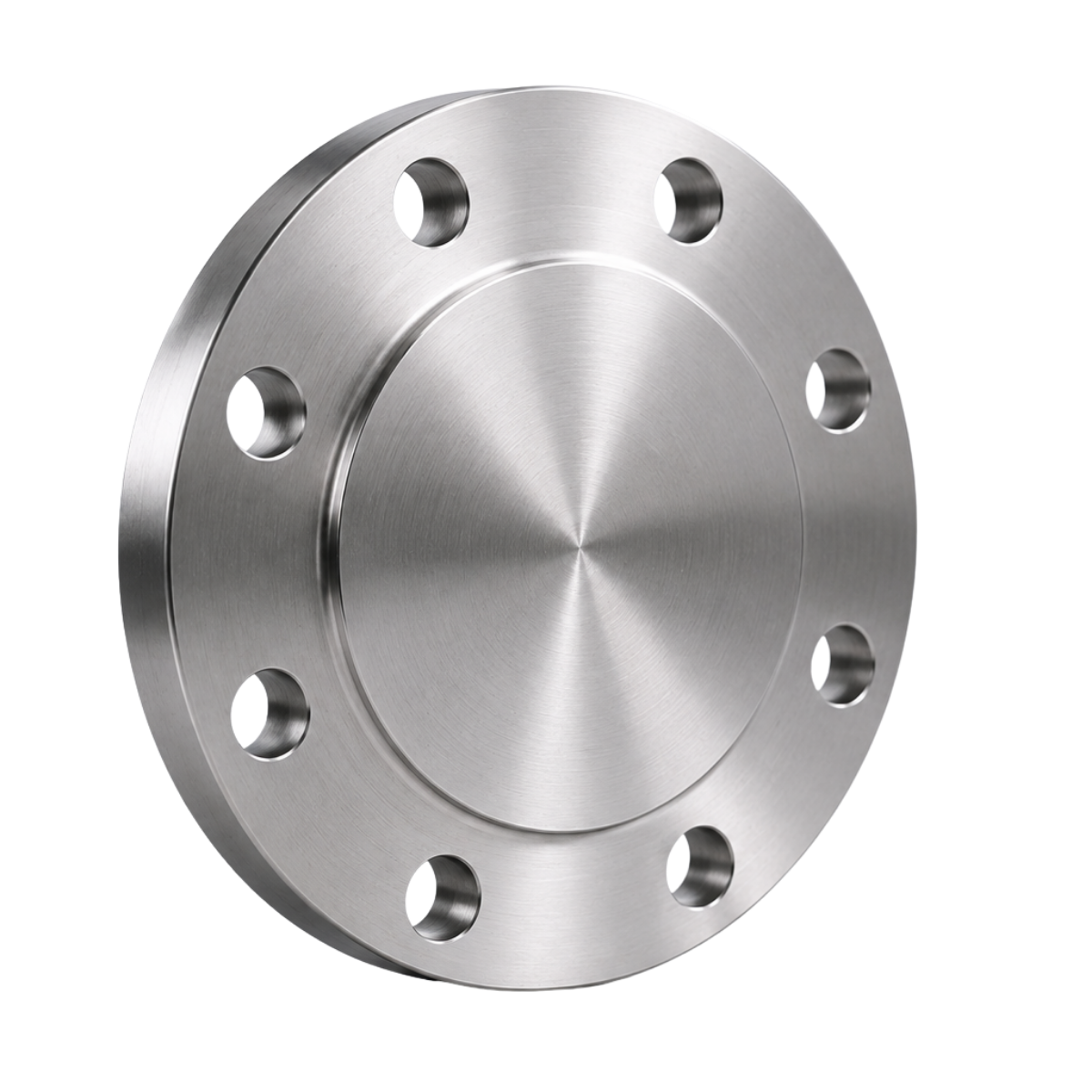
A blind flange has a solid face with no pipe bore, allowing the flange to completely close the connected piping or equipment opening when bolted to the mating flange.
Forged blind flanges designed to close the end of a piping system, vessel nozzle or pipeline connection. Available in carbon steel, low-temperature carbon steel and stainless steel, with pressure classes and facing configurations selected according to project requirements.
A blind flange is a solid flange without a central opening. It is bolted to a mating flange to close a piping system, equipment nozzle or pipeline connection.
Blind flanges are commonly used for isolating sections of piping, closing unused connections, providing access points for future expansion and terminating piping or equipment connections where a bolted closure is required.
Unlike a weld neck or slip-on flange, a blind flange has no pipe bore. Its thickness and pressure rating are designed for the applicable pressure-temperature requirements.
Rhevon can source blind flanges in different nominal sizes, pressure classes, facing configurations and material grades according to project requirements.
Supplied according to required NPS, pressure class, facing, material and applicable flange standard.
Blind flange selection is based primarily on nominal size, pressure class, facing configuration, material and required thickness.
A blind flange has a solid face with no pipe bore, allowing the flange to completely close the connected piping or equipment opening when bolted to the mating flange.
The flange face provides the gasket seating surface. Facing selection must correspond with the mating flange and gasket specified for the piping system.
Blind flange dimensions and thickness vary with pressure class. The selected class must correspond with the piping design and pressure-temperature requirements.
Blind flange material should be selected according to operating temperature, pressure, process media, corrosion requirements and the applicable piping specification.
| Material | Typical Specification | Typical Application |
|---|---|---|
| Carbon Steel | ASTM A105 | General Process · Oil & Gas |
| Low-Temperature Carbon Steel | ASTM A350 LF2 | Low-Temperature Service |
| Stainless Steel 304 | ASTM A182 F304 | Corrosive / Process Service |
| Stainless Steel 316 | ASTM A182 F316 | Corrosive / Process Service |
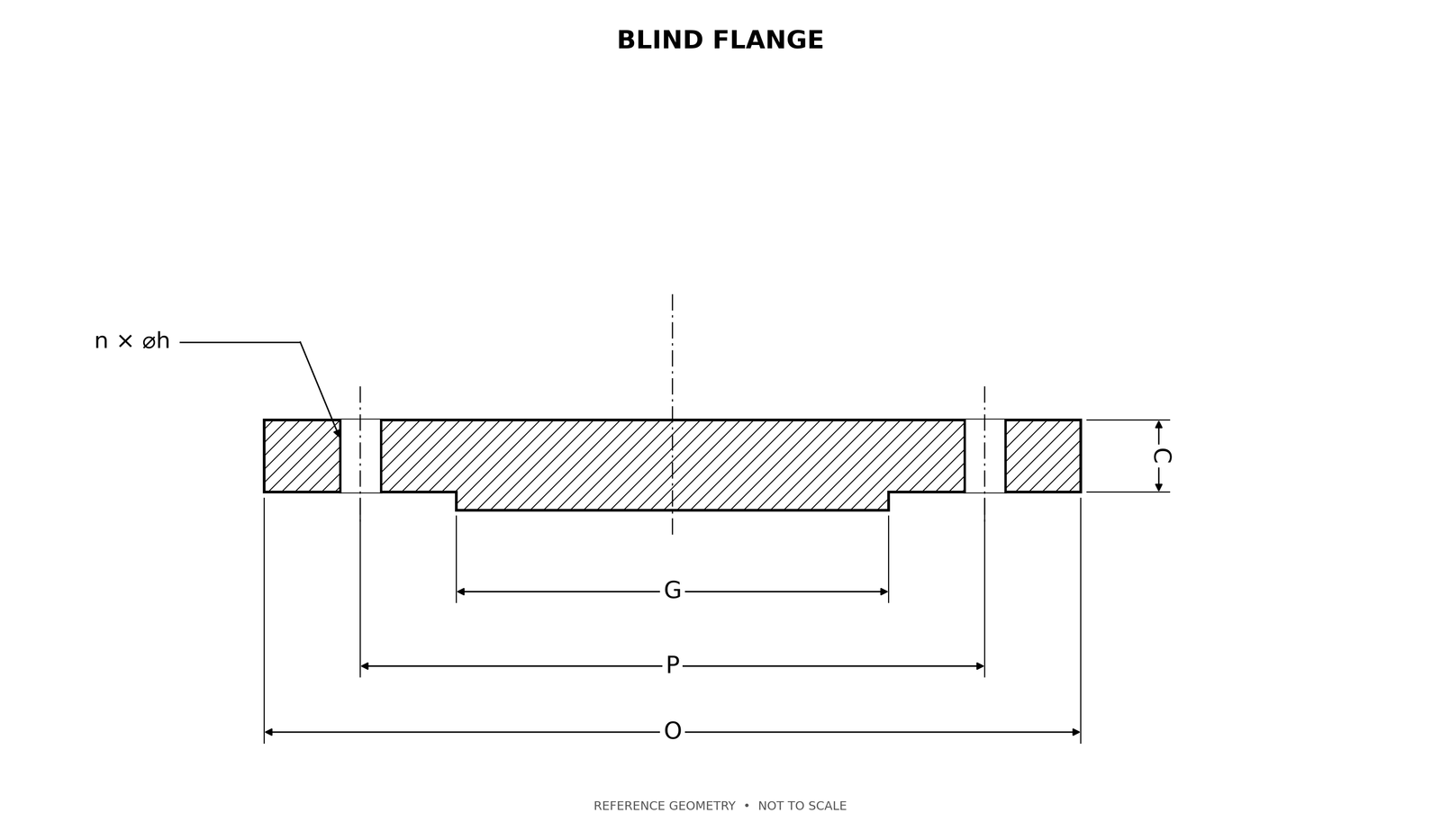
Class 150 and Class 300 raised-face flange envelope and drilling dimensions.
Swipe horizontally to view every column.
| NPS | O(mm) | CRFmin(mm) | P(mm) | n × h(mm) | dbolt(mm) | GRF(mm) |
|---|---|---|---|---|---|---|
| ½ | 88.90 | 9.65 | 60.45 | 4 × 15.75 | 12.70 | 35.05 |
| ¾ | 98.55 | 11.18 | 69.85 | 4 × 15.75 | 12.70 | 42.93 |
| 1 | 107.95 | 12.70 | 79.25 | 4 × 15.75 | 12.70 | 50.80 |
| 1 ¼ | 117.35 | 14.22 | 88.90 | 4 × 15.75 | 12.70 | 63.50 |
| 1 ½ | 127.00 | 15.75 | 98.55 | 4 × 15.75 | 12.70 | 73.15 |
| 2 | 152.40 | 17.53 | 120.65 | 4 × 19.05 | 15.88 | 91.95 |
| 2 ½ | 177.80 | 20.57 | 139.70 | 4 × 19.05 | 15.88 | 104.65 |
| 3 | 190.50 | 22.35 | 152.40 | 4 × 19.05 | 15.88 | 127.00 |
| 3 ½ | 215.90 | 22.35 | 177.80 | 8 × 19.05 | 15.88 | 139.70 |
| 4 | 228.60 | 22.35 | 190.50 | 8 × 19.05 | 15.88 | 157.23 |
| 5 | 254.00 | 22.35 | 215.90 | 8 × 22.35 | 19.05 | 185.67 |
| 6 | 279.40 | 23.88 | 241.30 | 8 × 22.35 | 19.05 | 215.90 |
| 8 | 342.90 | 26.92 | 298.45 | 8 × 22.35 | 19.05 | 269.75 |
Swipe horizontally to view every column.
| NPS | O(mm) | CRFmin(mm) | P(mm) | n × h(mm) | dbolt(mm) | GRF(mm) |
|---|---|---|---|---|---|---|
| ½ | 95.25 | 12.70 | 66.55 | 4 × 16.00 | 12.70 | 35.05 |
| ¾ | 117.35 | 14.22 | 82.55 | 4 × 19.05 | 15.88 | 42.93 |
| 1 | 123.95 | 15.75 | 88.90 | 4 × 19.05 | 15.88 | 50.80 |
| 1 ¼ | 133.35 | 17.53 | 98.55 | 4 × 19.05 | 15.88 | 63.50 |
| 1 ½ | 155.45 | 19.05 | 114.30 | 4 × 22.35 | 19.05 | 73.15 |
| 2 | 165.10 | 20.57 | 127.00 | 8 × 19.05 | 15.88 | 91.95 |
| 2 ½ | 190.50 | 23.88 | 149.35 | 8 × 22.35 | 19.05 | 104.65 |
| 3 | 209.55 | 26.92 | 168.15 | 8 × 22.35 | 19.05 | 127.00 |
| 3 ½ | 228.60 | 28.45 | 184.15 | 8 × 22.35 | 19.05 | 139.70 |
| 4 | 254.00 | 30.23 | 200.15 | 8 × 22.35 | 19.05 | 157.23 |
| 5 | 279.40 | 33.27 | 234.95 | 8 × 22.35 | 19.05 | 185.67 |
| 6 | 317.50 | 35.05 | 269.75 | 12 × 22.35 | 19.05 | 215.90 |
| 8 | 381.00 | 39.62 | 330.20 | 12 × 25.40 | 22.23 | 269.75 |
Blind flanges have no bore. The raised-face height is approximately 1.6 mm and is additional to C.
Flange class is not a fixed pressure in psi; use the material-specific pressure-temperature rating in the specified ASME B16.5 edition.
Flange requirements can be reviewed against the applicable material specification, dimensional standard, pressure class, facing and purchase order requirements before supply.
Common questions about blind flange specifications, pressure classes, facing, materials and applications.
A blind flange is used to close the end of a piping system, equipment nozzle or pipeline connection. It provides a bolted closure and can be removed when access to the piping or equipment is required.
No. A blind flange is a solid flange with no central opening. Its purpose is to provide a closure when bolted against a suitable mating flange with the required gasket and bolting.
RF means raised face, where the gasket seating surface is raised above the main flange face. FF means flat face, where the gasket seating surface is flat. The facing should be selected to match the mating flange and gasket arrangement.
Provide the NPS, pressure class, facing type, material grade, quantity and applicable flange standard. Any project-specific requirements for gasket, bolting, inspection or documentation should also be stated.
Yes. Blind flanges can be supplied as part of a mixed piping requirement together with compatible gaskets, studs, nuts, washers and other piping components.
Share the NPS, pressure class, facing, material, quantity and applicable specification. Mixed piping component requirements are also welcome.